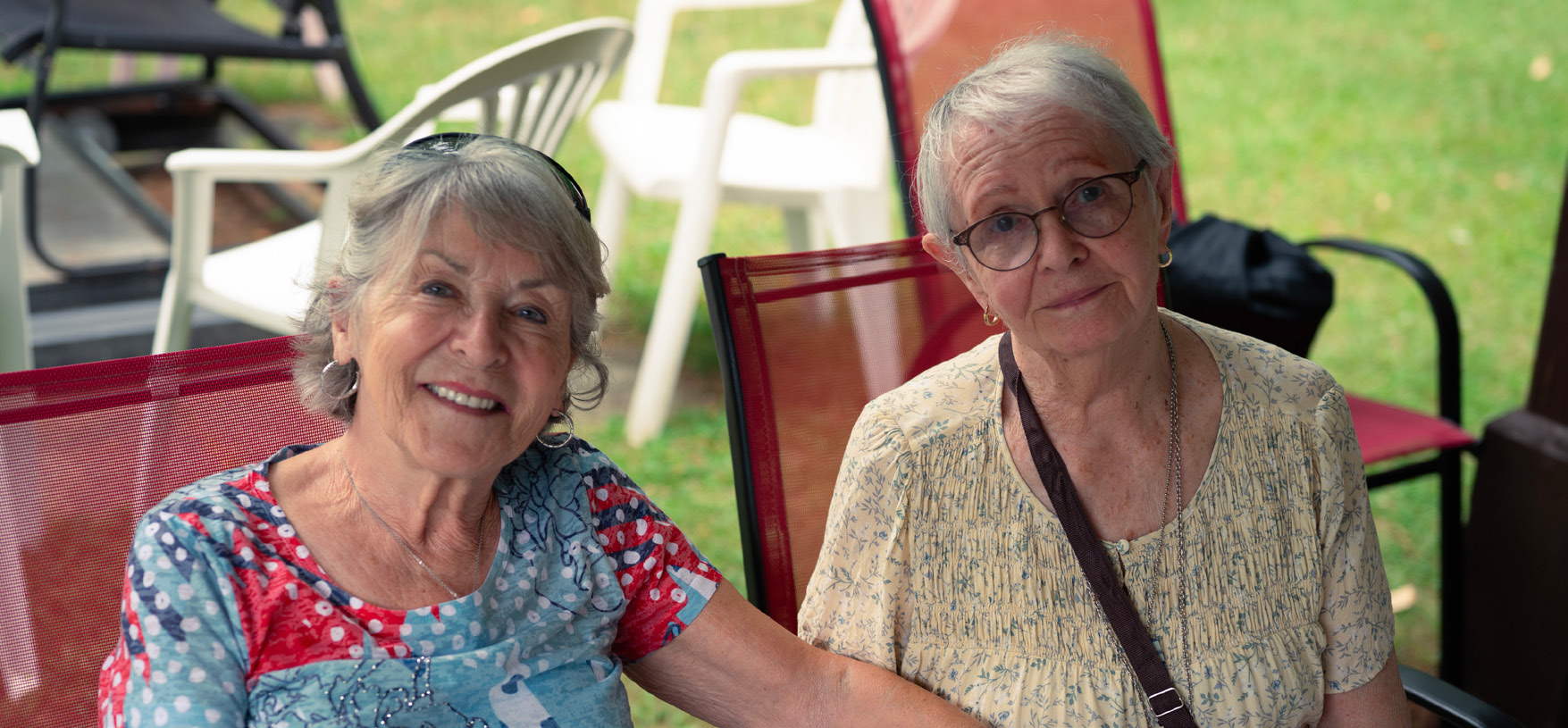
As its population ages at an accelerating rate, Quebec will be home to more than a million people aged 75 and over by 2030. This staggering figure masks a worrying reality: more than 200,000 of these elderly could be living in loneliness and social isolation. As part of a study conducted in collaboration with the research firm Léger, Little Brothers have produced a Portrait of the Elderly which reveals how older people themselves and the general public perceive ageing within our society. For beyond the statistics, it is our entire perception of ageing that is at stake. The study reveals a persistent unease within Quebec society: a mix of ageism, indifference and a lack of recognition towards older people. Yet they aspire to remain visible, useful and engaged.
Quebecers recognise these issues
The data speaks for itself: 72% of the population believe that loneliness among people aged 75 and over has increased in recent years. And 85% of respondents feel that older people are not sufficiently valued in our society. These perceptions reflect a genuine awareness. Yet they do not always seem to translate into concrete action. As Catherine Harel Bourdon, President and CEO of Little Brothers, points out, the surge of solidarity observed during the pandemic has run out of steam. Population ageing, though inevitable, struggles to remain at the heart of collective priorities.
The many faces of isolation
Our Portrait of the Elderly highlights several interconnected issues: loneliness, of course, but also the loss of dignity, a lack of recognition, growing individualism and the erosion of intergenerational bonds.
These realities directly influence the quality of life and well-being of older people. Ageism, unfortunately very widespread, is often a source of invisibility or indifference.
Rethinking our relationship with ageing
For researcher Martine Lagacé, a specialist in ageing, the study’s findings confirm an observed trend: ageism remains an increasingly prominent social issue. Its effects, though sometimes subtle, are profound. They influence not only how older people perceive themselves, but also how society views them.
Ultimately, this reflection goes far beyond the issue of ageing today. It brings us back to a fundamental question: how do we wish to age, both individually and collectively?
The vital role of Little Brothers
In light of these findings, Little Brothers remains committed to its mission. For over 60 years, the organisation has worked to break the isolation of the very elderly by creating a true family of the heart around them. Through loyal and long-term volunteer support, it provides essential human companionship to thousands of older people across Quebec.
The Québec of tomorrow will be an older society. The question remains whether it will also be more inclusive, more supportive and more humane.
To find out more about our Portrait of the Elderly, download our highlights document HERE